Travelling to the Gili Islands with Children: What You Need to Know

Updated: Sep 13
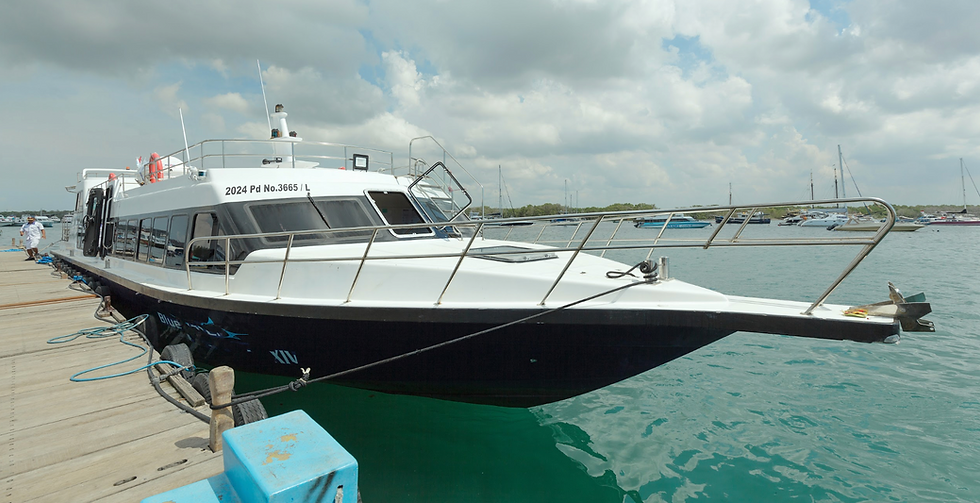
Travelling to the Gili Islands with children can be easier than many parents expect. The islands are car-free, compact enough to explore easily and known for their relaxed pace. The boat crossing requires the most planning, particularly when travelling with babies or young children. Here is what to consider before you book.
Life jackets aboard one Gili fast boat. Confirm that your operator carries appropriately sized life jackets for every child travelling.
Is Travelling to the Gili Islands with Children Safe Today?
Families travel between Bali, Lombok and the Gili Islands regularly, but whether a particular crossing is suitable for your child depends on the operator, vessel, route and sea conditions. Before booking, confirm the operator’s minimum-age policy, availability of child or infant life jackets, boarding procedure and cancellation policy.
Check the Gili Marine Index before travelling and again on the morning of departure, as conditions can change. A green rating indicates calmer conditions, although individual experiences may vary. Amber indicates increased movement, so families travelling with young children or anyone sensitive to motion should prepare accordingly and speak with their operator. Red indicates rough conditions. If the index is showing red, contact your operator before travelling to discuss whether changing your departure, vessel or travel date would be more appropriate.
Why Morning Departures Often Help
Sea conditions are often calmer in the morning, before winds and waves build later in the day. Although an early departure cannot guarantee a smooth crossing, it may provide a more comfortable journey for families. If your schedule is flexible, compare morning sailings and confirm the latest conditions with your operator before travelling.
Advice by Age
The preparation your family needs will depend on the age of your children. Confirm any age restrictions and child-safety requirements with your operator before booking.
Seasickness Tips for the Whole Family
If motion sickness is a known issue for anyone in your family, taking tablets around 30 minutes before boarding gives them time to take effect. Sitting mid-boat on the lower deck, keeping a gaze on the horizon rather than looking down at phones or books, and choosing a morning departure all reduce the chance of a rough experience. Ginger sweets or rehydration sachets are worth packing as a backup for anyone who feels queasy despite precautions.
Getting Around Once You Arrive
All three Gili Islands are free from cars and petrol powered motorbikes, which makes them genuinely relaxed for families, no traffic to manage with small children in tow. Cidomo, horse-drawn carts, are the traditional way to move luggage and people from the boat landing to your accommodation, useful if you have a lot of gear or tired legs after the crossing. Bicycles are widely available for getting around once you're settled, and most beach bars, restaurants, and dive shops are within easy walking distance of the main landing areas on Gili Air and Gili Meno in particular. Gili Trawangan is larger but still very manageable on foot or by bike. Most accommodation sits within walking distance of the landing areas, and there are plenty of family-friendly stays on the islands to choose from.
Cidomo, electric scooters, and bicycles are the main ways to get around on car-free islands.
Practical Notes
Basic clinics operate on the islands, but advanced treatment may require medical evacuation by boat to Lombok or Bali. Families managing an ongoing medical condition should confirm available facilities and save local emergency contacts before travelling. Comprehensive travel insurance that includes medical evacuation cover is strongly recommended, especially when travelling with children.
Cash remains widely used, particularly at smaller businesses. ATMs are available on Gili Trawangan and Gili Air but are more limited on Gili Meno, and they can run low during peak season. Bring enough Indonesian rupiah from Bali or Lombok rather than relying entirely on island ATMs.
Final Tips
Book a morning departure if you have any choice in the matter. Check the Gili Marine Index the day before and the morning of your crossing. Pack more than you think you'll need for young children, since options on the islands themselves are limited. And relax once you arrive, the pace of life on the Gilis is exactly the kind of slow, easy environment that makes family travel simpler, not harder.
Planning What to Do There
For the full picture of what each island offers, Discover Lombok's Ultimate Guide to the Gili Islands covers Gili Trawangan, Gili Air, and Gili Meno in detail.


Comments